Running a busy laundry operation takes more than just washing—you need a dryer that’s reliable, gentle on fabrics, and fast enough to keep everything moving. Whether you manage a hotel, gym, salon, clinic, or restaurant, choosing the right clothes dryer nz setup can mean the difference between consistent, high-quality laundry and costly delays or worn textiles.
This guide helps you select a commercial clothes dryer in NZ setup that balances fabric care, energy efficiency, and quick turnaround. It also explores whether adding another clothes dryer on-site or outsourcing drying is the smarter choice, depending on your load volume, fabric mix, staffing, and the level of quality your customers expect.
Why Commercial Clothes Dryer In NZ Choice Matters
A reliable clothes dryer is key to keeping laundry running smoothly every day. It helps protect fabrics while ensuring fast, efficient turnaround for your business.
Dryers As A Core Workhorse
Dryers sit at the heart of commercial laundry. They affect how long towels last, how well linens stay hygienic, and whether uniforms feel fresh and presentable. When drying runs late, rooms wait for linen, gyms run low on towels, and clinics risk poor stock levels. A well-matched clothes dryer in NZ keeps laundry predictable and avoids last-minute pressure.
Drying also shapes energy use. If cycles run longer than needed or loads get overdried, power use climbs, and fabrics wear faster. Choosing the right size and drying method can reduce this waste without reducing quality.
Fabric Care Shapes Guest Trust
Customers notice textiles more than many owners expect. A hotel guest feels scratchy towels. A salon client sees faded capes. A clinic patient becomes uneasy if the sheets look tired or smell warm rather than clean. Overheated drying causes stiffness, shrinkage, and dull colour. These issues can lead to poor reviews and doubts about hygiene.
Gentle commercial drying improves comfort and supports your brand by keeping fabrics soft, consistent, and well finished.
Commercial Vs Domestic Clothes Dryers In NZ
Commercial and domestic dryers are designed for very different workloads. Understanding how a clothes dryer handles volume and fabric care makes a big difference for daily operations.
What Sets Commercial Units Apart
A commercial clothes dryer is built for repeated daily cycles and heavier loads. It usually offers stronger drum support, higher airflow, and motors designed for longer duty. Many models allow custom programme control and have sensors that stop the heat when fabrics reach the right dryness.
Commercial units also focus on service access. Panels open easily, filters clear fast, and parts are designed for repair rather than replacement. For busy sites, these design choices matter.
Limits Of Household Machines
Domestic dryers can work for light volume, but problems arise once load counts rise. Common pain points include:
- Higher breakdown rates when used all day
- Long cycles that slow linen turnover
- Uneven drying that leaves damp spots
- Heat control that is too basic for mixed fabrics
- Safety risks from pushing beyond the intended load size
Types Of Clothes Dryers NZ Options
Different clothes dryers in NZ handle heat, airflow, and moisture in unique ways. Matching the dryer type to your workload and space makes daily laundry easier and gentler on fabrics.
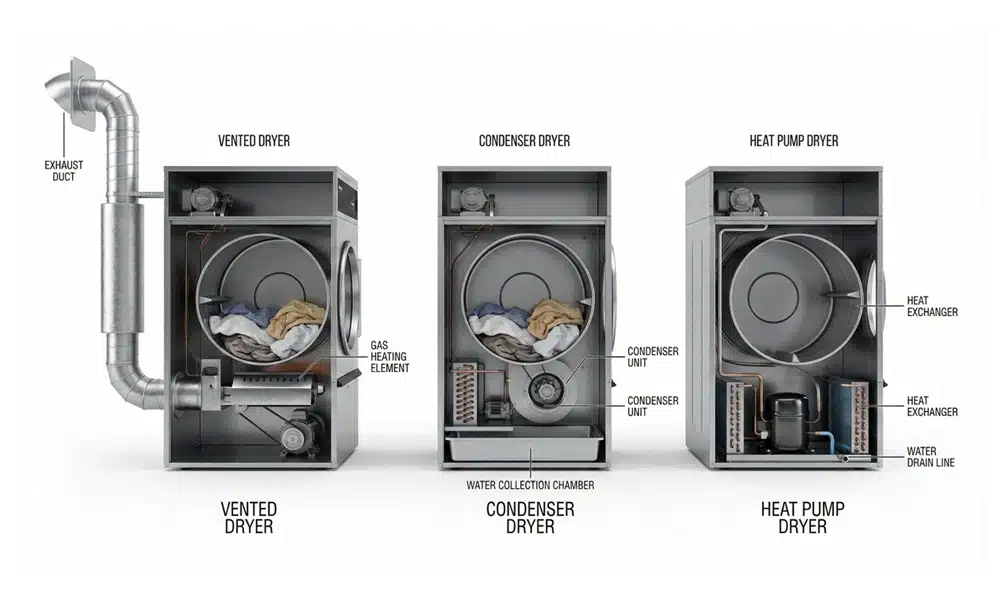
Vented Dryers With Simple Setup
Vented dryers expel warm, moist air outside. They tend to be simple and easy to operate. However, they release heated air, which means more energy loss. They also require a proper vent path, which limits placement. A vented clothes dryer can suit sites with low to moderate volume and easy outdoor access.
Condenser Dryers For Flexible Rooms
Condenser dryers collect moisture and send it to a tank or drain. They work in spaces where venting is hard, such as internal laundry rooms in motels or clinics. Their efficiency sits in the middle range, and cycles may take longer than other options. Still, for many sites, their placement flexibility is a big advantage.
Heat Pump Dryers For Low Heat Care
A heat pump clothes dryer in NZ uses lower temperatures and recycles warm air. This reduces fabric stress and is gentle on delicates, uniforms, and blends. It also tends to reduce energy demand per cycle in real use. For businesses focused on long textile life and careful finish, this type often becomes the top pick, and many owners call it the best clothes dryer in NZ for mixed fabrics.
Gas Dryers For High-Output Sites
Gas dryers use gas burners to heat the airflow quickly. They can be strong performers for high-volume towel and linen operations. They need correct installation and ongoing checks. They are less common in small NZ sites, but can suit large hospitality or sport facilities that need rapid throughput.
Fabric Care Fundamentals For Commercial Drying
Proper fabric care during drying prevents damage and keeps items looking their best. Using the right settings and routines protects textiles and extends their lifespan.

How Common Fabrics React
Most commercial loads contain a mix of fabrics. Each one needs a different approach.
- Cotton towels and linens take heat well but shrink if overdried.
- Uniforms often include blends that soften better with moderate heat and a cool-down phase.
- Activewear relies on elastic fibres that degrade under high heat.
- Delicates, such as massage sheets or spa robes, need low temperatures and short cycles.
- Synthetic blends dry fast but can trap odour if the heat is too low and the airflow is poor.
Features That Guard Textiles
Modern commercial machines include tools that protect fabrics while keeping output high. Look for:
- Sensor drying to stop heating at the target dryness
- Low temperature options for blends and delicates
- Reverse tumble to reduce tangling and wear
- Cool down phases to cut fibre stress
- Drum surfaces that reduce snag risk
- Programmes tuned for towels, bedding, uniforms, and small items
Daily Habits That Reduce Wear
Even a top unit cannot protect fabrics if operators use harsh settings. Simple rules help:
- Sort loads by fabric and weight
- Avoid overloading as airflow drops and rubbing rises
- Use lower heat for uniforms, activewear, and blends
- Choose sensor modes when available
- Remove items soon after the cycle ends to avoid wrinkles and a flat feel
Real Value of Clothes Dryer NZ
Long-term performance shows the real value of a clothes dryer in NZ. Machines that run efficiently and last longer save time and effort.
Think Beyond The Ticket Cost
You asked not to mention price directly, so here is the practical way to compare options without numbers. Focus on the total ownership load over the years. A machine that saves energy, reduces breakdowns, and keeps textiles usable longer often wins, even if the initial spend feels higher.
Ask yourself how often you replace towels or sheets, how much staff time goes into re-drying damp items, and how many days a year you deal with a machine out of action. These hidden costs shape your real return.
Match Spending To Work Demand
Commercial dryers sit in different tiers. Instead of thinking in currency, think in work scope. A light-use salon may suit a smaller commercial unit. A motel or gym with daily bulk loads needs a larger, heavier-duty machine with strong support and a solid local service plan.
This framing keeps decisions tied to use, not to the sticker on the box, and helps compare clothes dryer NZ prices in terms of value rather than upfront spend.
Comparing Commercial Dryer Features
Specs and features affect how well a clothes dryer performs for your business. Looking at capacity, programmes, and support ensures it fits your daily laundry needs.
Right Capacity For Your Sector
Capacity is one of the biggest drivers of performance. Match kilograms to your load type.
- Gyms often run towel-heavy loads that need a large drum space.
- Motels and serviced apartments handle bulky linen that benefits from higher capacity and strong airflow.
- Salons and clinics may run smaller loads more often, so a mid-size unit with shorter cycles can fit better.
If loads are too small for the drum, energy waste rises. If the drum is too small for the load, drying quality falls. A well-sized clothes dryer in NZ improves both speed and fabric life.
Programmes That Fit Workflow
Programme choice shapes staff ease and consistency. Useful options include:
- Preset cycles for common loads
- Custom programmes for your textile range
- Delayed start for off-peak use
- Simple control panels for quick training
- Clear cycle labels that reduce mistakes
When staff can follow a clear routine, you get fewer errors and fewer rewashes.
Support And Local Service Strength
Commercial machines must be easy to service in NZ. Before you commit, check:
- Local parts supply
- Typical repair turnaround
- Who handles warranty claims
- Whether the provider offers on-site support
A strong service network reduces downtime risk and helps your clothes dryer stay productive through busy periods.
Managing Laundry: Own or Outsource
Laundry can be done on-site or through an outside service. Knowing the options helps see if a clothes dryer in NZ is really needed.
Compare Two Operation Models
In-house drying offers control and direct access. It can work well if you have steady volume, trained staff, and space for machines plus ventilation. However, labour time, maintenance, and energy use sit on your side.
Outsourcing shifts those tasks away. You pay for use, but you avoid managing equipment and staff time around laundry. For some sites, this is the simplest path to consistent textiles.
24/7 Laundromat Solutions
A serviced laundromat can act as an extension of your business. You gain access to high-capacity machines, professional programmes, and flexible hours. This helps when you face peak season spikes, last-minute events, or sudden equipment failure.
For many operators, this option feels like adding capacity without adding machines. It also allows you to test demand before you invest in another clothes dryer in NZ.
When Outsourcing Makes Sense
Outsourcing often suits businesses that:
- Have large volume swings across the week or season
- Lack of staff time for laundry supervision
- Need rapid turnaround during long opening hours
- Operate in spaces that cannot support extra machines
- Prefer to put funds into core services, not equipment
If these points match your situation, a high-quality external service may outperform a new on-site clothes dryer in NZ.
Smarter Laundry Solutions for Your Business
Efficient laundry is about more than speed. It protects fabrics, maintains hygiene, and keeps daily operations running smoothly. Comparing dryer types, capacities, and protective features ensures consistent results and extends textile life.
Stoddard Road Laundry offers a 24/7 service solution that handles high volumes and reduces operational workload. Access to such a service adds flexibility during busy periods or unexpected spikes in laundry demand. A reliable clothes dryer in NZ provides control and predictable quality, keeping fabrics gentle, customers satisfied, and staff focused on core tasks.
FAQs
How Do I Protect Towels And Linens From Damage In A Clothes Dryer?
Use sensor drying and avoid high heat. Do not overload the drum. Include a cool-down phase so fabrics stay soft and in good shape.
When Should I Outsource To A Commercial Laundry Instead Of Buying Another Dryer?
Outsource if your laundry volume varies, staff are busy, or space is limited. A serviced laundromat gives extra capacity without needing more machines.
How Much Does A Commercial Clothes Dryer NZ Typically Cost To Run Per Load?
Energy use depends on load size, dryer type, heat, and cycle length. Heat pump dryers use less energy. Track your cycles and energy to estimate your own running cost.
